Young Leaders in Toledo: FAN Spring Conference 2026

The Forum Alpbach Network (FAN) Spring Conference 2026 took place in Toledo, hosted by Club Alpbach Spain, bringing together more than 70 participants from over 20 countries across the continent and beyond.
Dieser Blogpost ist nur auf English verfügbar.
The Forum Alpbach Network (FAN) Spring Conference 2026
From 27 to 29 March, the Spanish historic city of Toledo became something more than what it usually is. For a few days, its streets were not only a reminder of the past, but also a stage for the present and future of Europe. The Forum Alpbach Network (FAN) Spring Conference 2026 took place there, hosted by Club Alpbach Spain, bringing together more than 70 participants from over 20 countries across the continent and beyond.
What unfolded was not just a conference in the traditional sense, but a shared experience shaped by people, conversations, and a city that quietly held it all together.
Beyond the programme itself, there was a particular excitement in sharing something more personal: a country, a region and particularly a magical city.
From Europe to Toledo
The atmosphere of the opening day carried a particular energy. Participants arrived from different corners of Europe, each bringing their own background, expectations, and questions. Very quickly, however, something shifted. The formal boundaries faded into something more fluid, as introductions turned into conversations and conversations into connections.
The on-site organizing team from Club Alpbach Spain—Marina Alcázar Cid, Lucía Palacio Gutiérrez, Vincenzo Montagna, and Paula Catalina de la Cruz—welcomed everyone not only into the conference, but into their home.
As they shared in the opening ceremony “Toledo reminds us that coexistence is complex, but essential. In times of growing polarization, spaces like the FAN are more important than ever: spaces to listen, to exchange, and to build together. Organizing this conference has been a journey of dedication, teamwork, and genuine passion for this wonderful network and for our mission within our regions, our country and Europe”.
A Castle, a Beginning, and a Shared Question About Europe
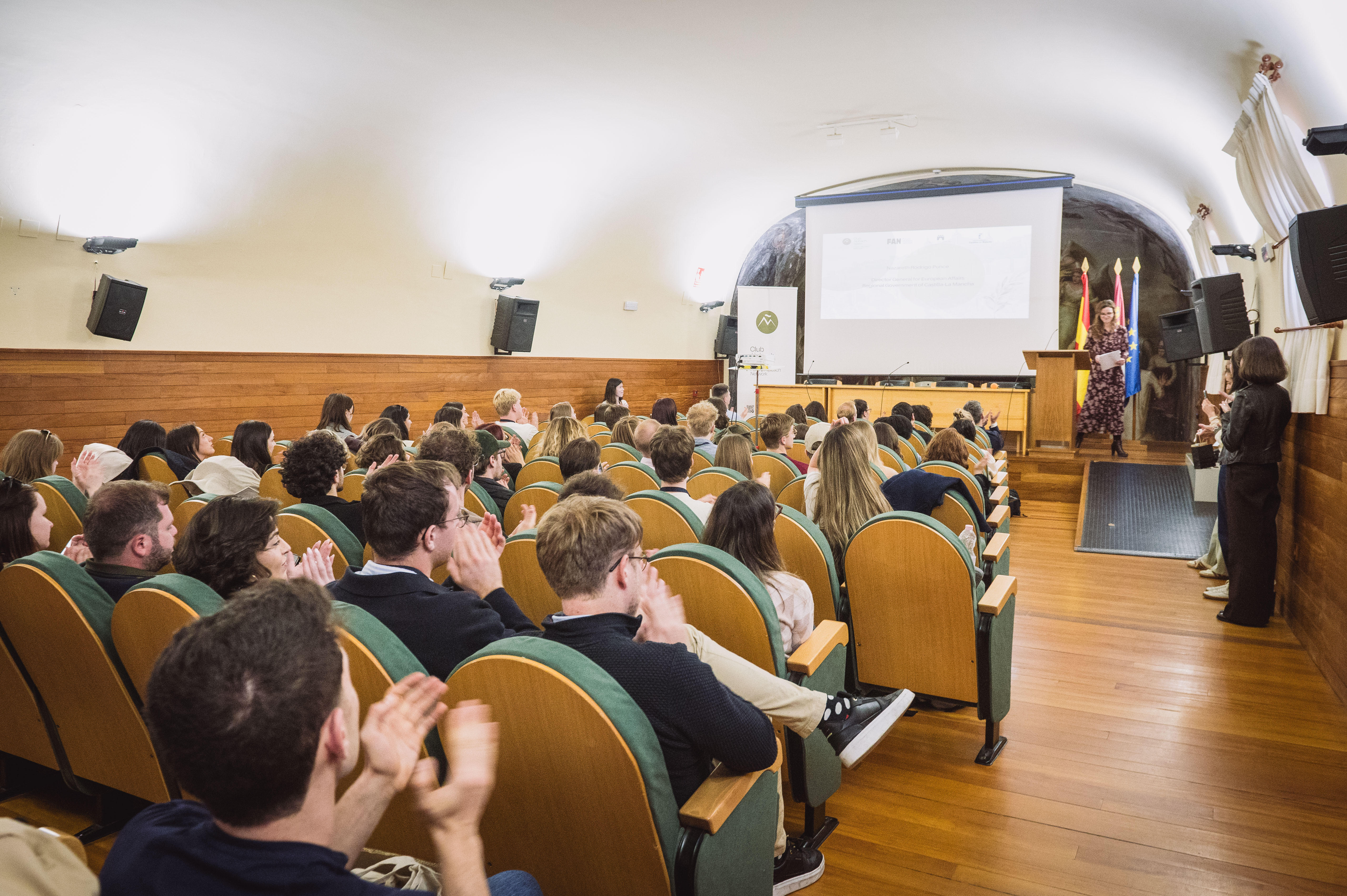
The conference took place at the Castillo de San Servando, a setting that already seemed to carry its own weight of history. Inside its walls, institutional voices from across Spain and Europe gathered to mark the beginning of the programme.
Representatives from the Regional Government of Castilla-La Mancha, the Embassy of Austria in Spain, the European Parliament Office in Spain, the Spanish Congress of Deputies, the University of Castilla-La Mancha, Council of European Municipalities and Regions and other institutions spoke, but what stood out was not only what was said but also where it was said. A medieval castle holding within a modern conversation about Europe created a contrast that felt almost symbolic.
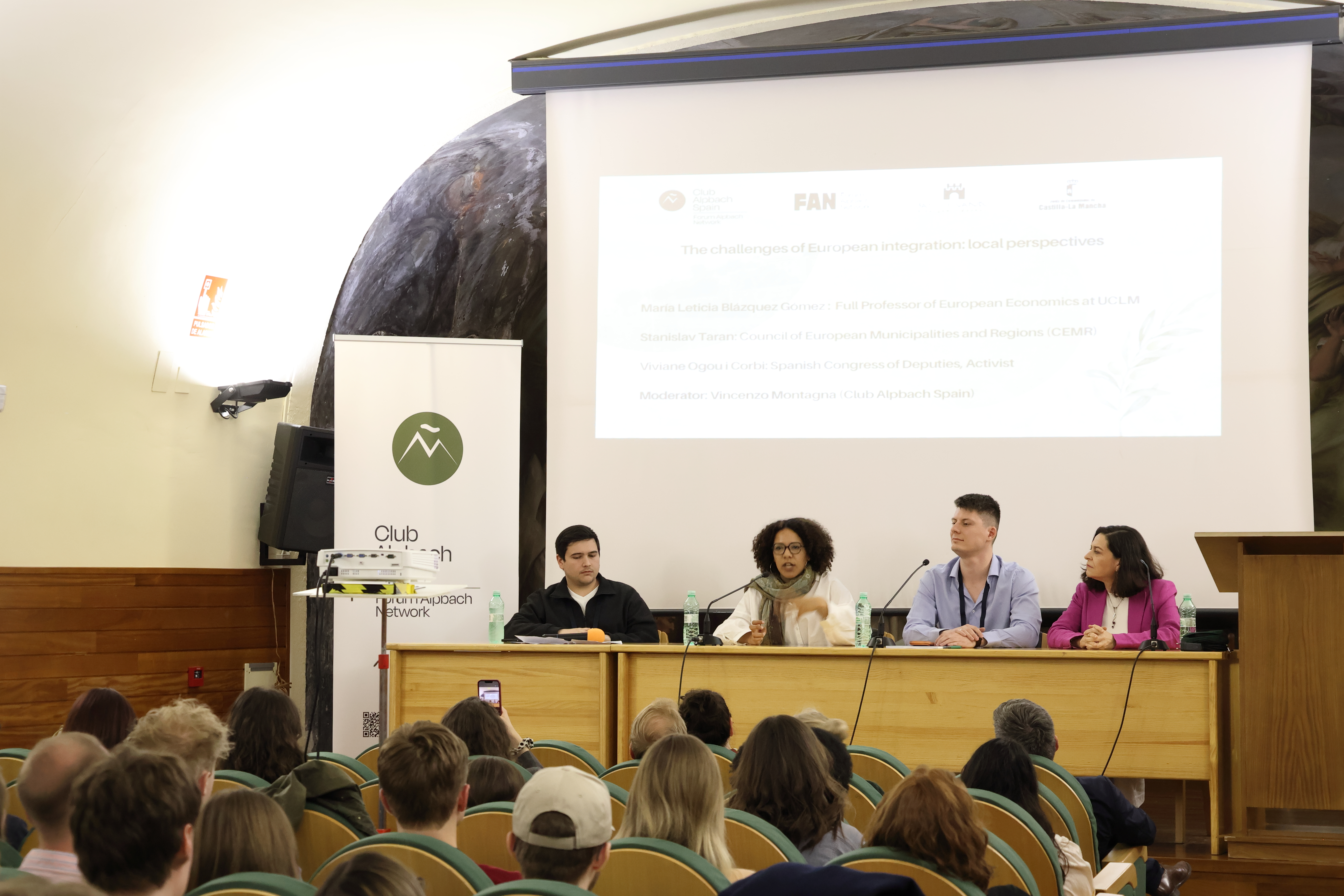
The discussion included a panel on “The Challenges of European Integration: Local Perspectives”. Here, the tone shifted from formal speeches to exchange. Migration, regional governance, and Europe’s strategic challenges were not treated as abstract topics, but as lived realities. It was especially revealing to see how the new generations actively engage in the European debate, not only as observers, but as true protagonists. Because the future of Europe is not built only in Brussels or Strasbourg. It is also built in spaces like this, in the regions, in universities, in open dialogue, and through participation. The presence of young participants in the room gave the discussion a particular intensity, as questions were not only asked, but also challenged and reimagined.
The Magic of Toledo
From the very first moment, Toledo did what it always does best — it spoke for itself. Beyond its sunlight, incredible food, and vibrant celebrations (and yes, participants would experience all of that) Toledo revealed something much deeper.
Outside the conference rooms, Toledo itself became part of the experience. With more than 2,000 years of history, Toledo carries the traces of civilizations, empires, and cultures that shaped it over centuries. Known as the “City of the Three Cultures,” it was a place where Christians, Muslims, and Jews lived side by side during the Middle Ages. This coexistence was never simple, but it was marked by dialogue, exchange, and shared intellectual life alongside moments of conflict and tension.
That layered history is still visible in the city today. You will find a synagogue steps away from a church, the remains of a mosque near a cathedral. These are not just monuments, they are symbols of a shared past, of complexity, and of the possibility of coexistence.
And yet, that very complexity gave meaning to being there. It made the conversations happening inside the conference feel grounded in something real. Europe was no longer just a political or institutional idea, it was something that could be traced in stone, in streets, and in centuries of shared and conflicting histories.
A Network Comes to Life
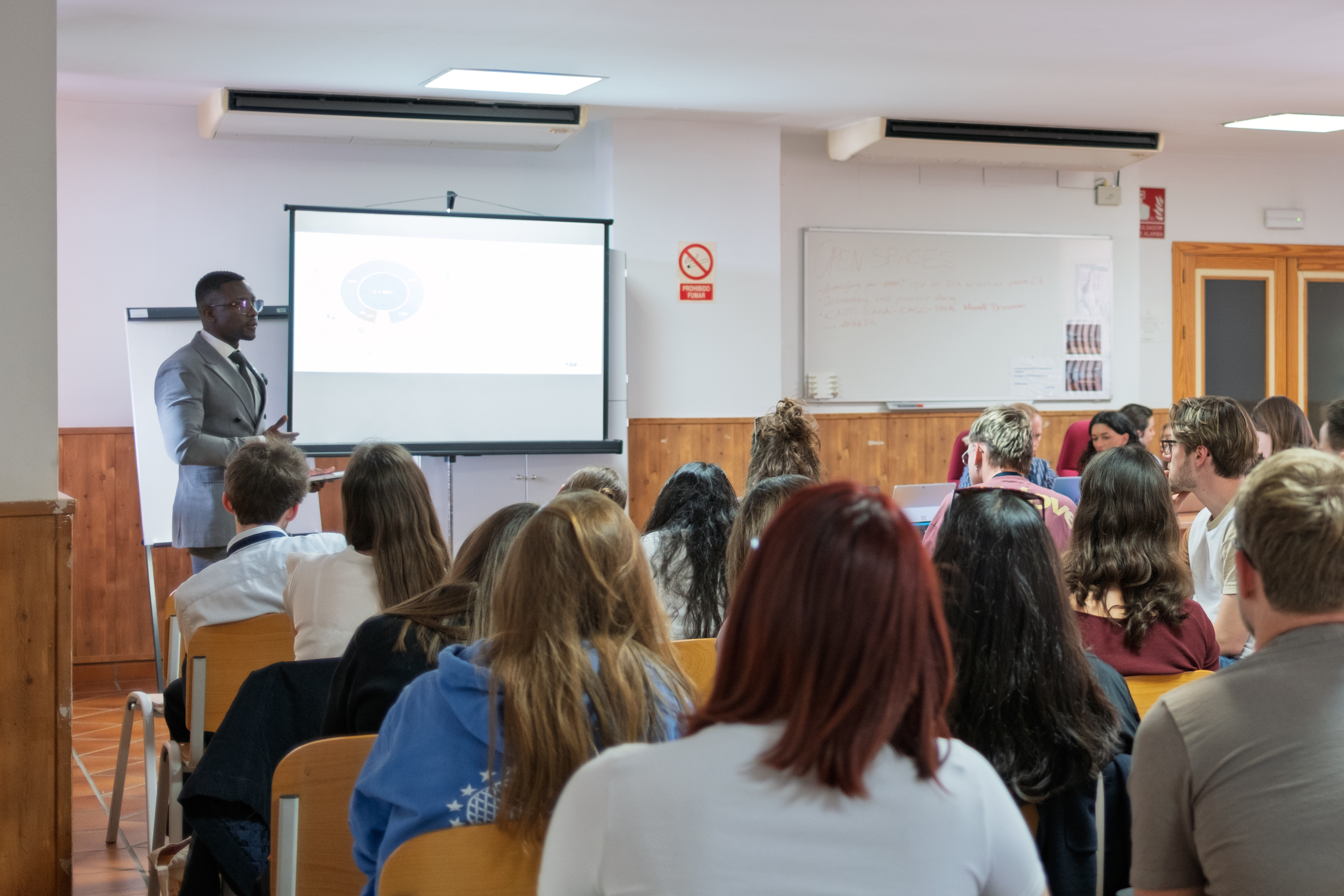
As the days went on, the rhythm of the conference settled into something organic. Structured sessions, workshops, and discussions on the future of the Forum Alpbach Network, and ultimately the European Forum Alpbach, formed the backbone of the programme. But what truly defined the experience happened in between.
Meals naturally stretched into the Spanish sobremesa, participants found themselves wandering through Toledo’s streets in informal scavenger hunts, or sitting by the river as discussions moved effortlessly from one topic to another.
It was in this balance that something became clear. The conference was not only about discussing Europe, but about practicing it.
A story to be continued…
By the final day, nothing about Toledo had changed, but the way people experienced it had. The city remained the same, yet it had gained new depth through shared memories: discussions that began in conference rooms and continued in its streets, ideas shaped collectively, and encounters that felt both spontaneous and meaningful.
As people began to leave, there was no formal sense of conclusion. Instead, there was a quiet continuation of something that did not fully end with the conference itself.
What stayed was not a single message or outcome, but the experience of having been part of something that relied on connection. In a time often defined by distance and division, the days in Toledo offered something simpler and more difficult at the same time: the act of listening, speaking, and building together.
And in that sense, the story of the FAN Spring Conference 2026 did not really end in Toledo. It just continues elsewhere.
A piece by Marina Alcázar Cid on behalf of Club Alpbach Spain and the Forum Alpbach Network.
Forum Alpbach Network
Find our more about the Forum Alpbach Network (FAN):