Sovereign Europe Forum 2026

Recap of an official MSC side event co-hosted by European Forum Alpbach, United Europe, and Sovereign Europe Forum.
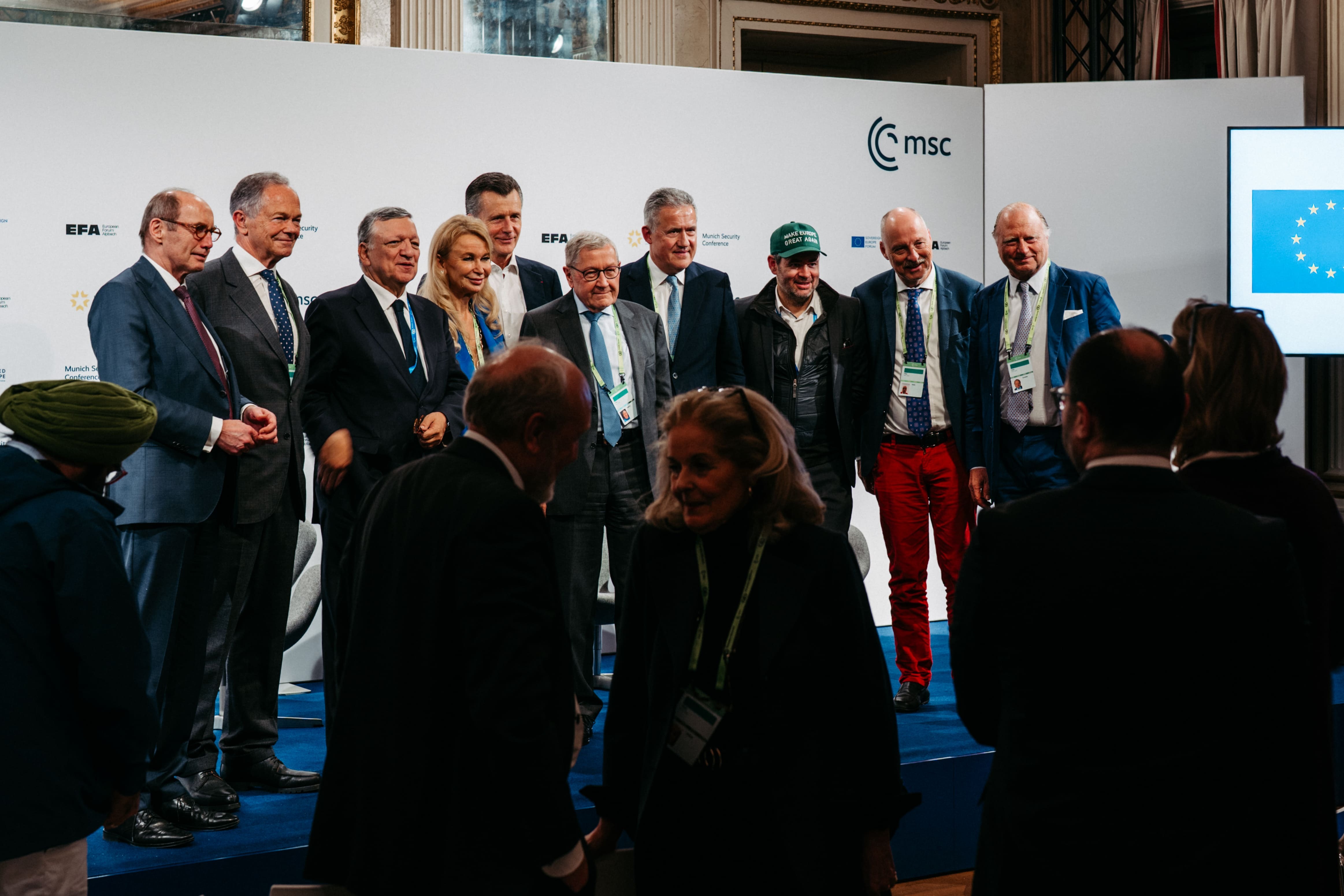
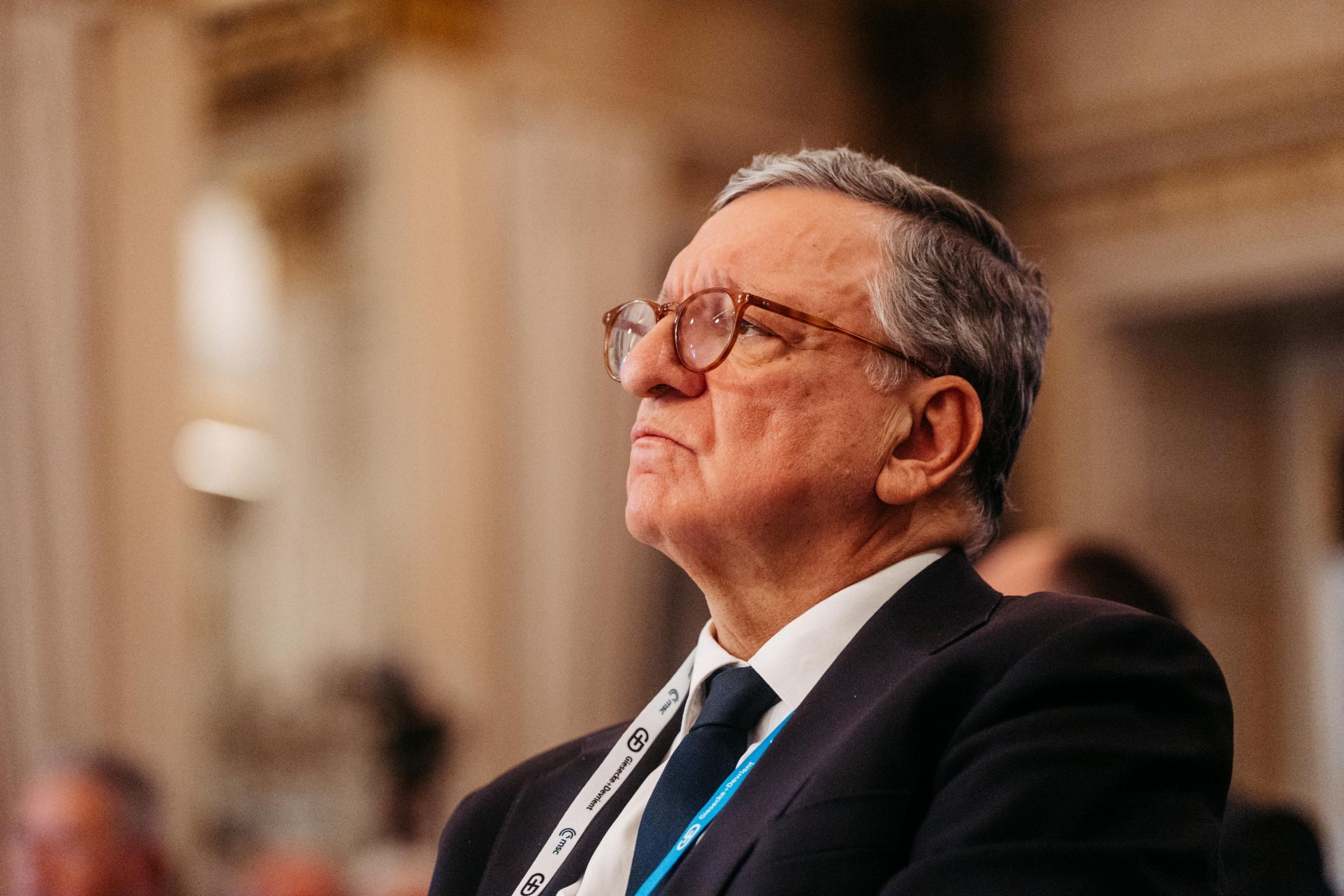
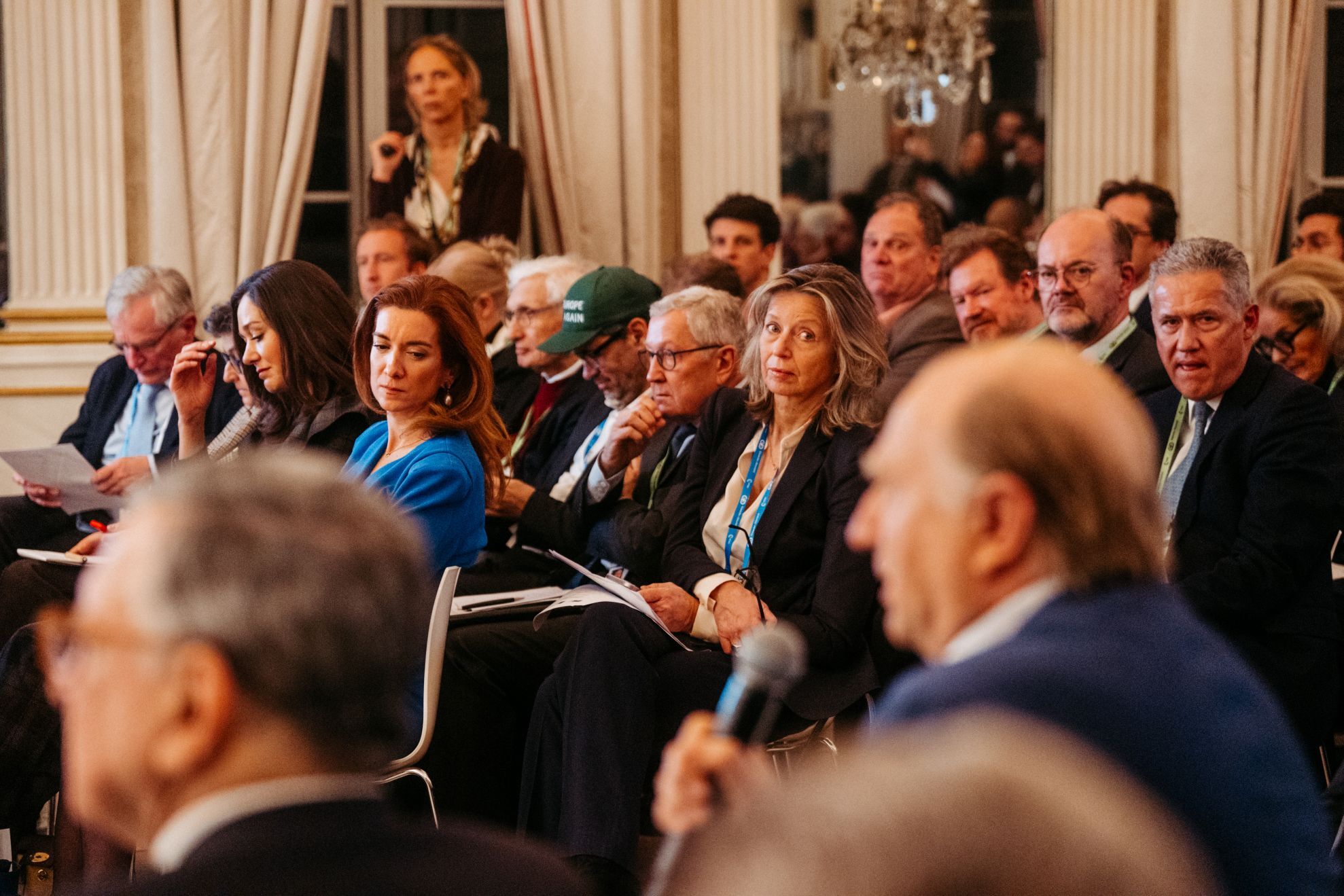
On 12 February 2026, we convened the Sovereign Europe Forum 2026 at Hotel Bayerischer Hof (Königssaal) in Munich as an official side event of the Munich Security Conference—co-hosted by European Forum Alpbach (EFA), United Europe, and the Sovereign Europe Forum.
The evening ran under Chatham House Rules, enabling a frank, implementation-oriented exchange.
The programme was organised in three panels—European Defence Union, Technological Sovereignty & Digital Infrastructure, and Capital Markets Union—yet the conversation had one clear centre of gravity throughout: European security and defence. Each panel approached it from a different angle, but always with the same practical question in mind: what must Europe do—politically, industrially, and financially—to strengthen sovereignty and the capacity to act?
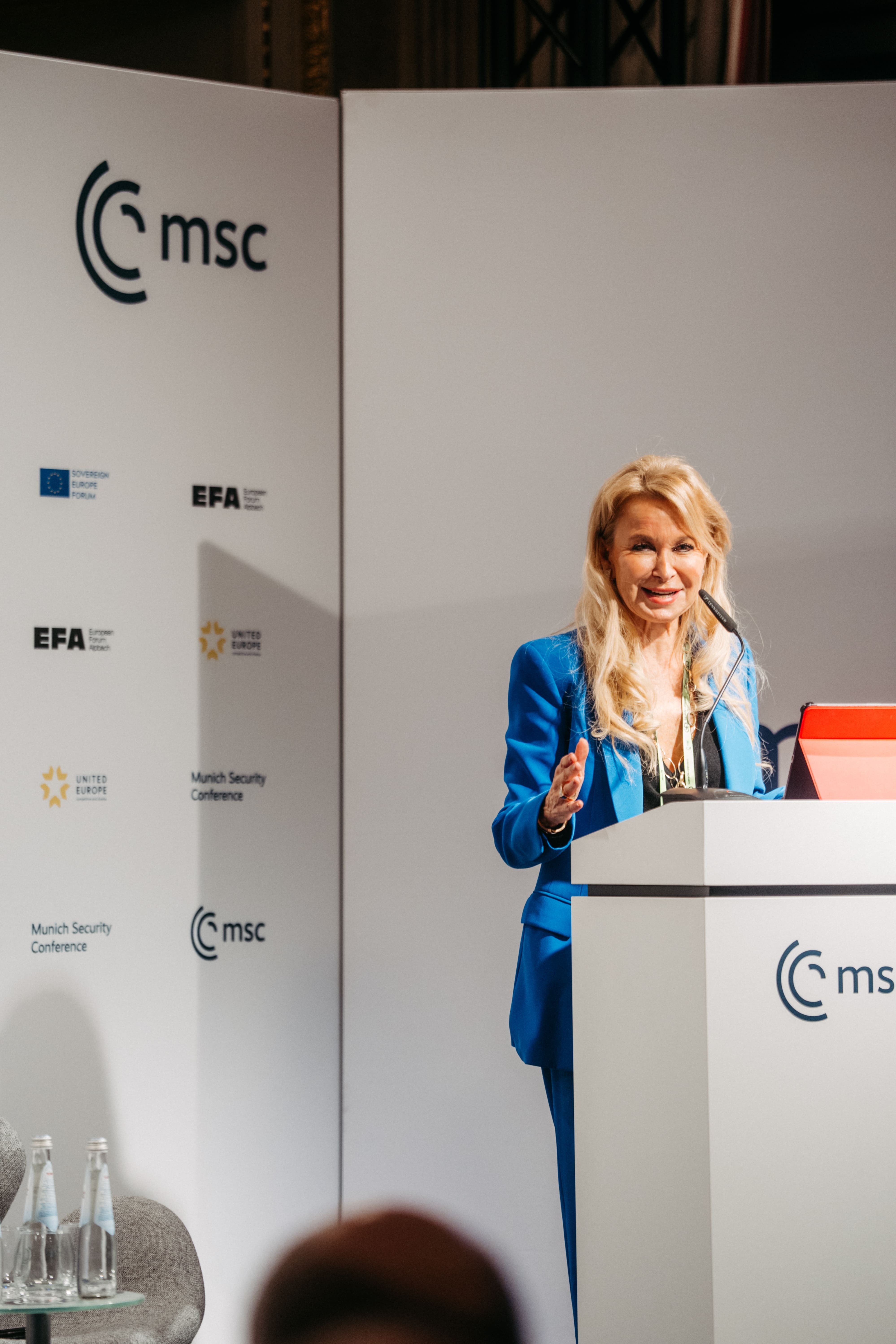
As EFA President Othmar Karas put it in his opening, the agenda is best understood as one strategic conversation rather than parallel debates: “These are not three separate conversations. They are one strategic conversation, seen from three angles, and they only work if they support each other.”
Panel I: European Defence Union — from urgency to delivery
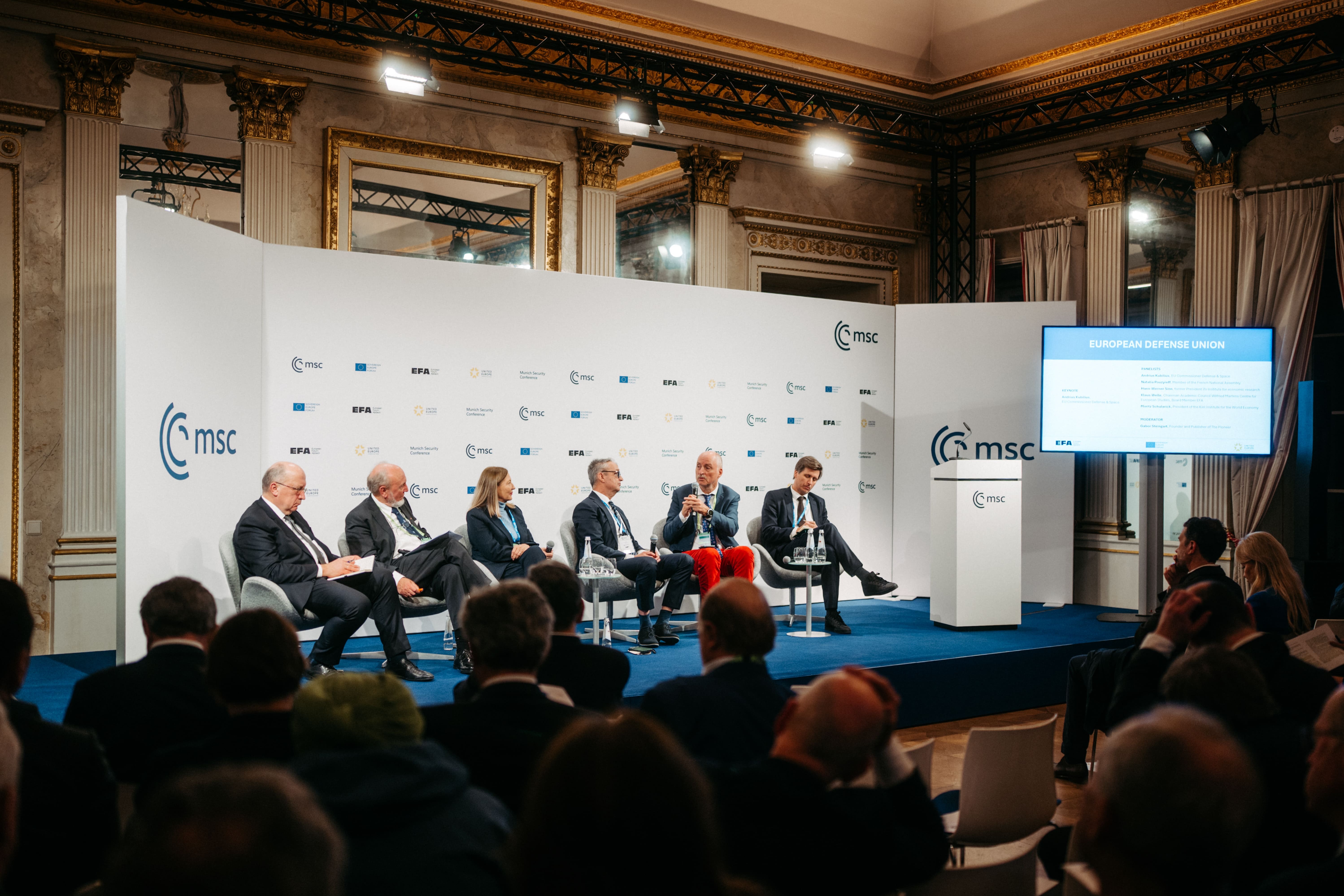
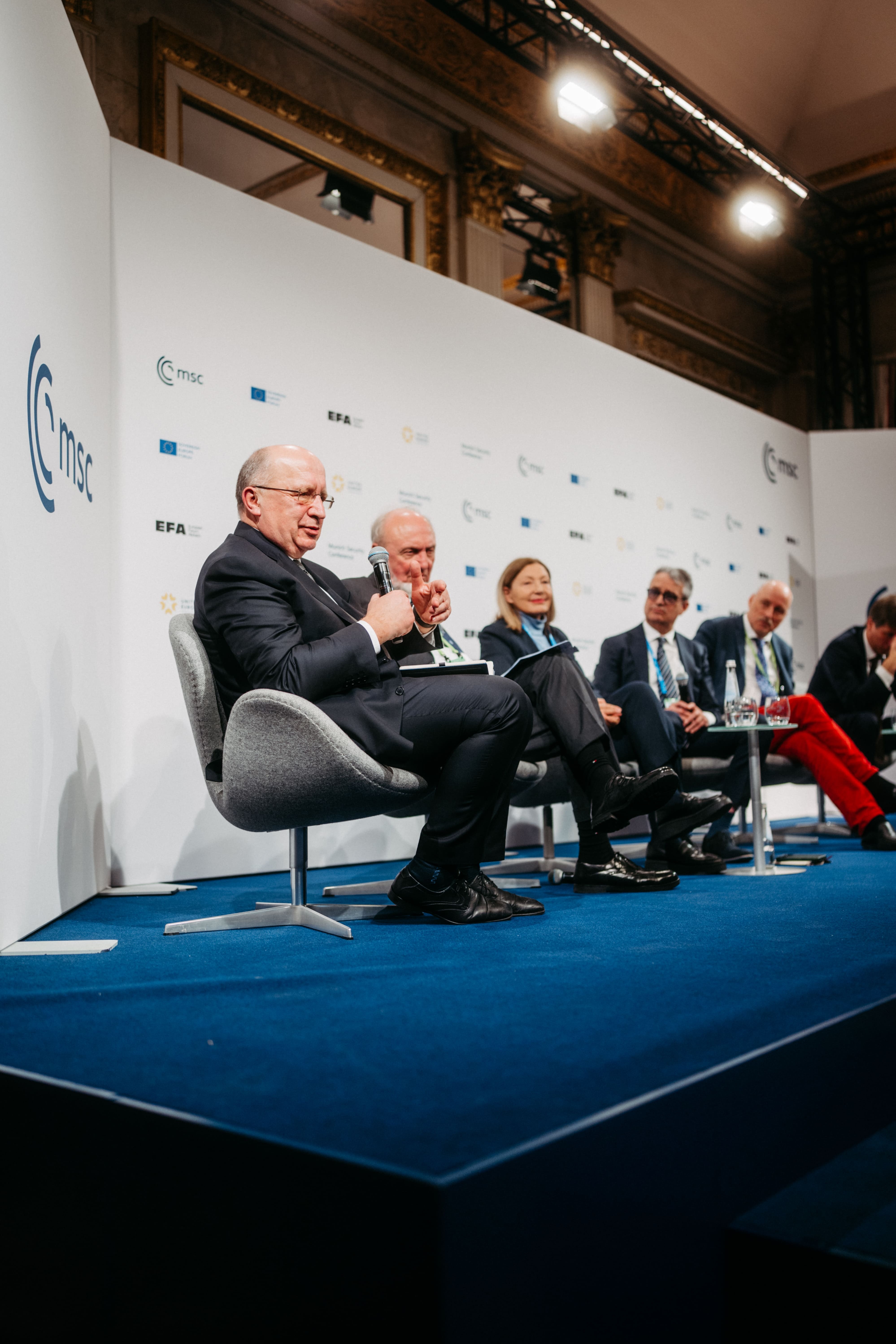
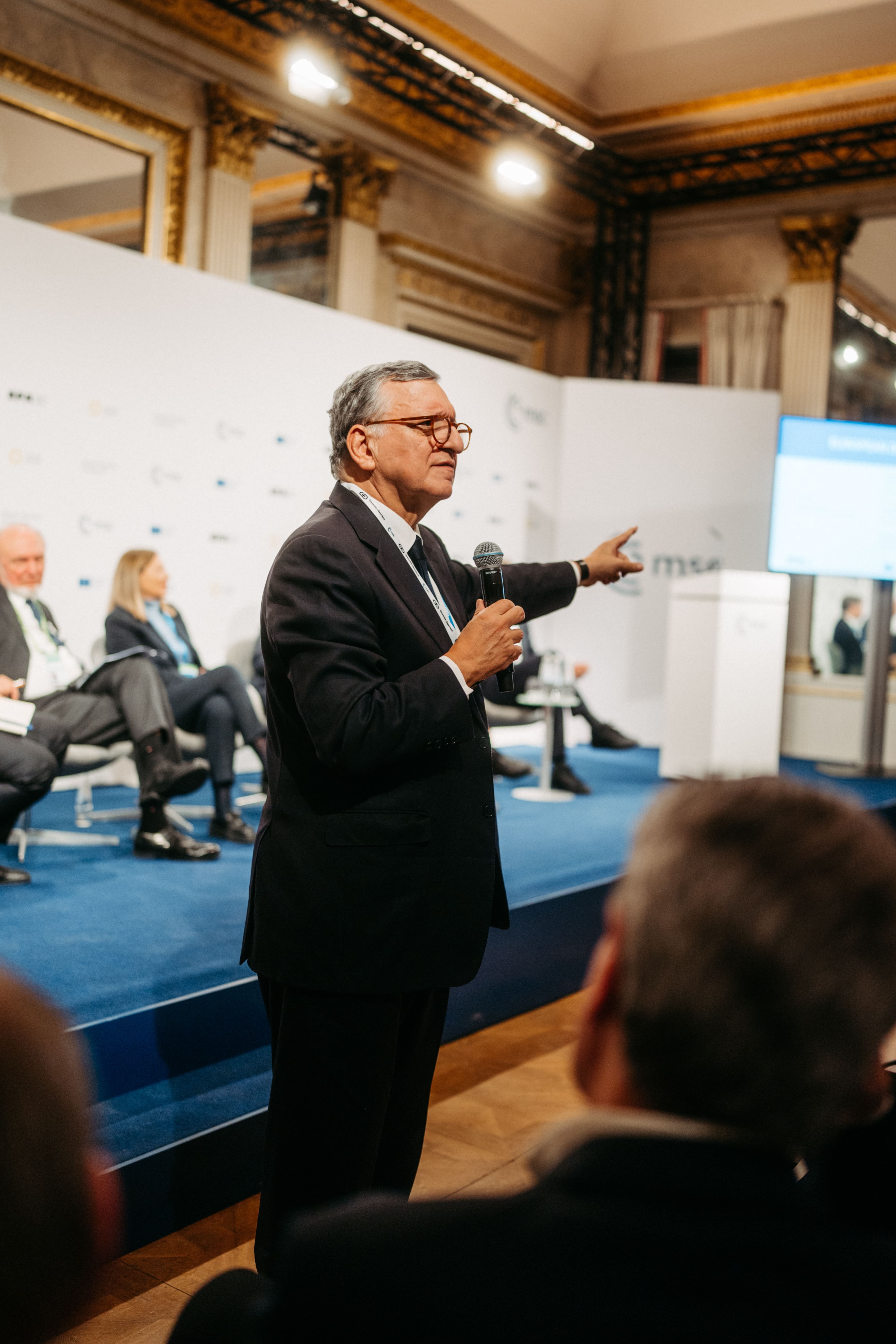
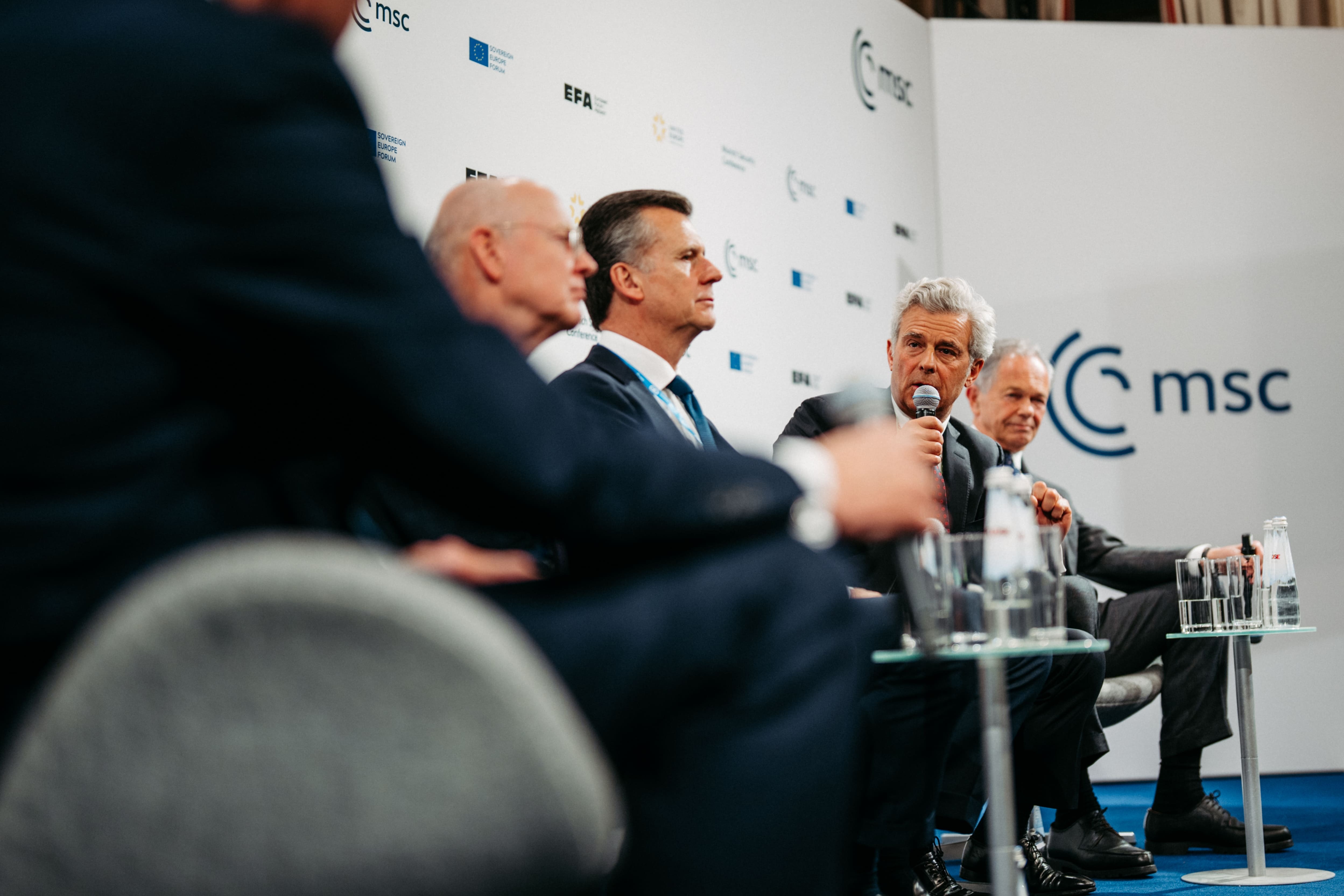
The evening opened with the defence discussion, moderated by Gabor Steingart (The Pioneer), with a keynote by Andrius Kubilius (EU Commissioner for Defence and Space) and panel contributions from Natalia Pouzyreff (Member of the French National Assembly), Hans-Werner Sinn (former President of the ifo Institute for Economic Research), Klaus Welle (Chairman, Academic Council, Wilfried Martens Centre for European Studies; Board Member, EFA), and Moritz Schularick (President, Kiel Institute for the World Economy).
The tenor was sober and practical: a shared sense of urgency, paired with a strong emphasis on European agency. Across the discussion, one distinction came up repeatedly—inputs versus outputs. Defence budgets are rising across Europe; what matters now is whether that translates into readiness, interoperability, sustainable production capacity, and strategic enablers that Europe can rely on in a crisis.
Beyond capability gaps, the conversation also reflected the geopolitical reality in which Europe now operates. A recurring point was that Europe’s growing responsibility for conventional defence is being shaped by expectations in the transatlantic relationship as well as by European publics—making credibility, delivery and cohesion a strategic imperative.
A central strand in the discussion was that Europe will only be able to deliver at speed if it can align its diverse strategic cultures. Threat perceptions, constitutional constraints and decision-making traditions differ across the continent—and any credible Defence Union agenda needs to work with these realities, not against them. Against that backdrop, participants discussed governance and coordination options that could provide political direction and faster coherence, including ideas commonly framed in terms of a European Security Council-type format to bridge differences while avoiding paralysis on every operational detail.
The panel also returned to the question of financing Europe’s defence sovereignty in ways that enable joint output rather than parallel national efforts. Alongside national spending, the discussion included proposals aimed at accelerating scale—such as common borrowing or joint financing mechanisms for joint procurement and shared capabilities/forces—as a means to reduce duplication and support credible delivery.
Taken together, the discussion reflected a clear shift: Europe’s defence debate has moved beyond principles. The focus is now on execution—building common priorities, industrial scale and workable formats for decision-making that can translate urgency into capability.
Panel II: Technological sovereignty & digital infrastructure — enabling security through scale
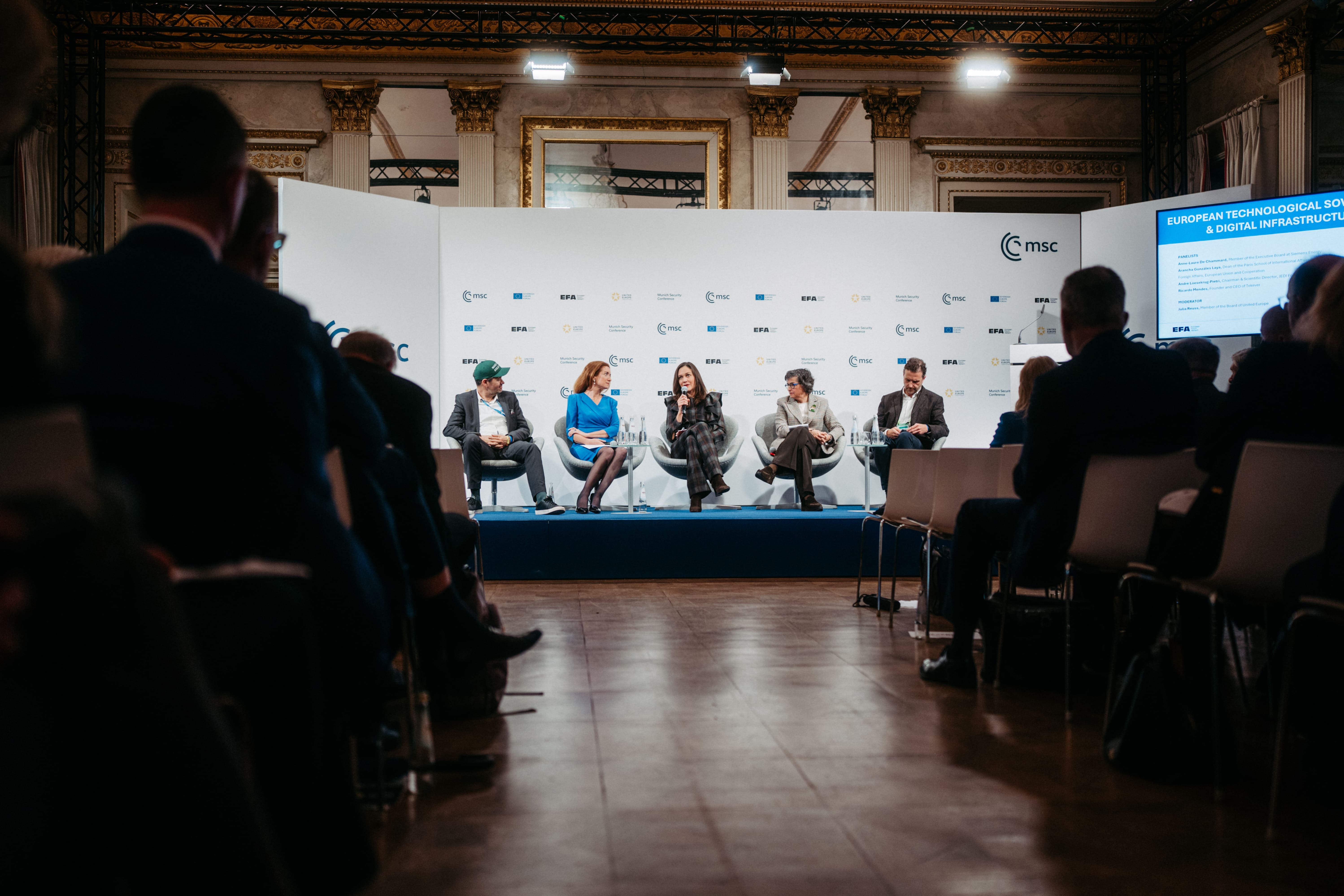
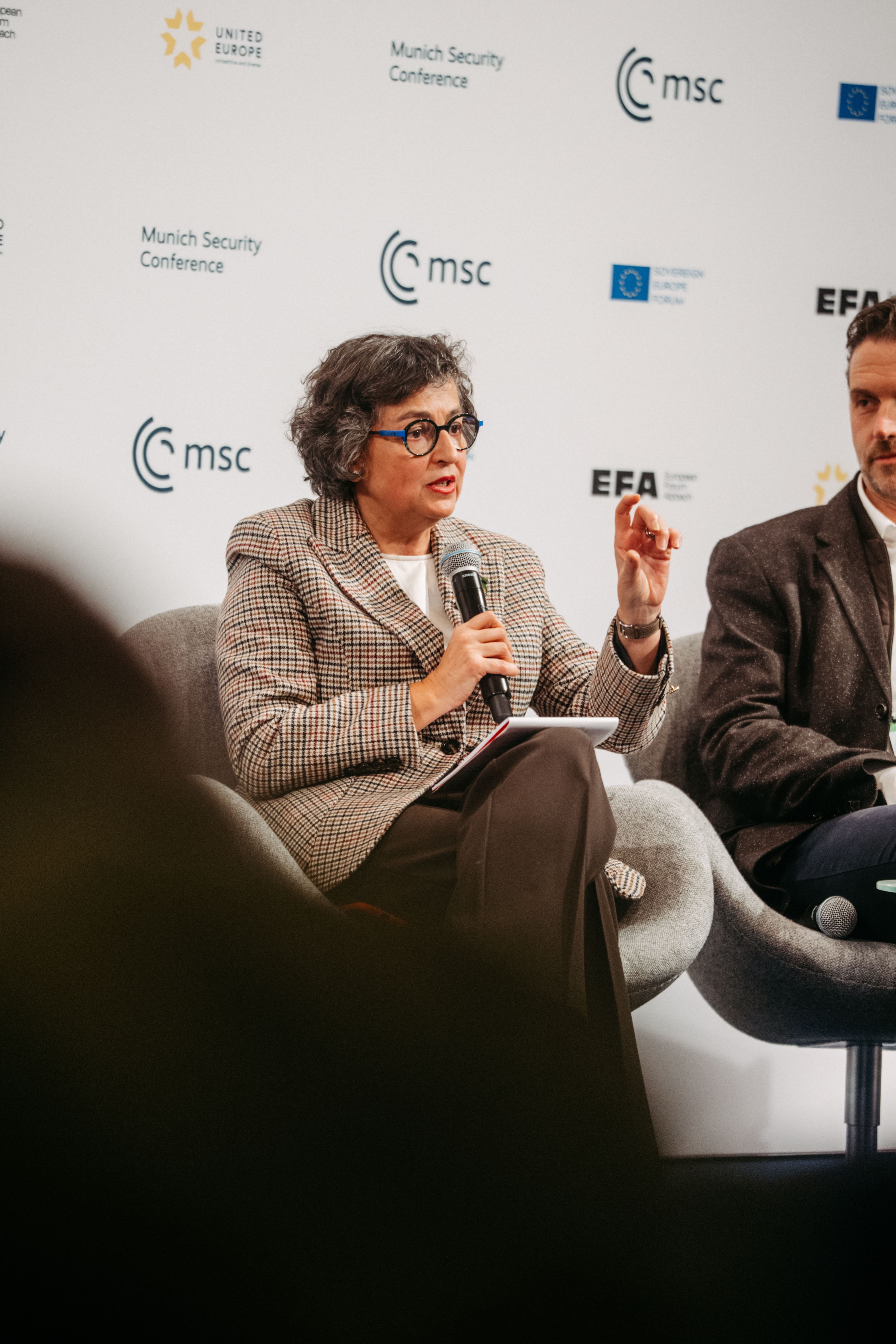
The second panel approached European sovereignty through the lens of the foundations that make security policy workable: industry, infrastructure, energy, and critical technologies. It brought together Arancha González Laya (Sciences Po), André Loesekrug-Pietri (JEDI Foundation), Ricardo Mendes (Tekever), and Anne-Laure de Chammard (Siemens Energy), moderated by Julia Reuss (United Europe).
The discussion treated technological sovereignty not as a slogan, but as a delivery agenda: Europe’s capacity to act in security and defence depends on its ability to build, protect and scale what is critical—energy systems, technological innovation, digital infrastructure, supply chains, and dual-use technologies.
A recurring theme was the need for a “grand bargain” that aligns talent, ecosystems, markets, finance, and procurement so that European innovation can translate into deployment at scale.
The conversation repeatedly returned to the same practical point: Europe has considerable innovative strength, but fragmented markets and uneven regulatory environments can slow down scale-up and make investment harder—especially for infrastructure-heavy sectors. A more complete and functional European Single Market was therefore seen not only as an economic accelerator, but as a strategic asset: it can provide the scale that Europe’s defence industry needs, while also strengthening innovation and competitiveness well beyond the defence domain.
From this perspective, implementation is not merely about avoiding vulnerabilities; it is about tangible gains. If Europe can align demand signals (including procurement), build scale across borders, and ensure resilient infrastructure, it is better positioned to reduce dependencies, accelerate industrial capacity, and retain value creation and technological leadership in Europe. As Othmar Karas highlighted in his opening speech: “Technology and infrastructure are no longer just an economic agenda; they are instruments of influence, security, and freedom of action.”
Panel III: Capital Markets Union — financing sovereignty and reducing strategic exposure
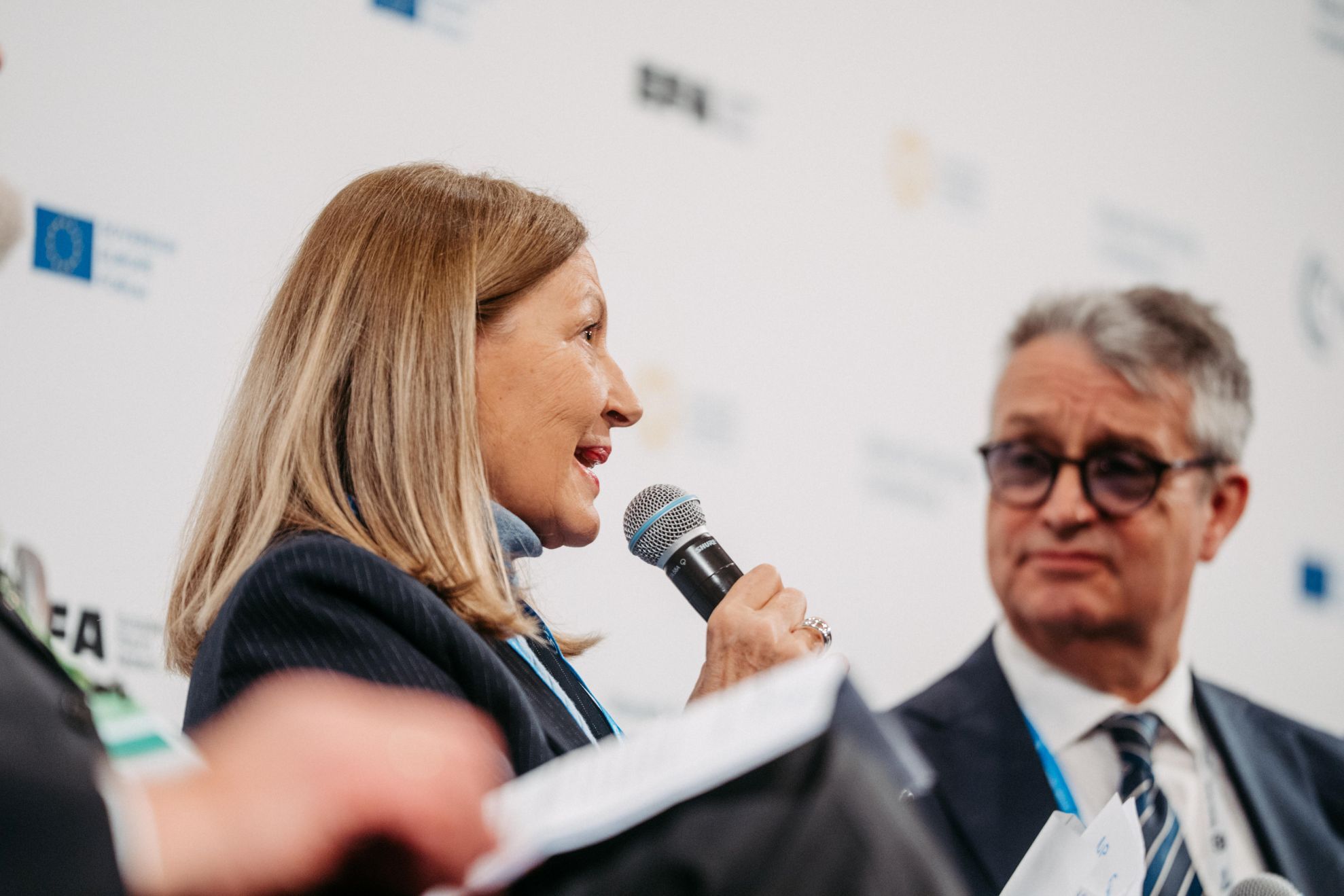
The final panel addressed the financing layer behind capability and scale. It featured Martin Blessing (Personal Representative of the Federal Chancellor for Investments in Germany), Philipp Hildebrand (Vice-Chairman, BlackRock), Philippe Oddo (Managing Partner, ODDO BHF), and Andreas Treichl (Chairman, Erste Foundation), moderated by Beat Wittmann (Porta Advisors).
The discussion started from a familiar European paradox: Europe has significant wealth and savings, yet allocation often does not support scaling European companies and strategic industries at the pace required.
From a sovereignty perspective, that matters because financing conditions shape where firms grow, where industrial capacity is built, and whether Europe can fund security-relevant innovation and production without drifting into new dependencies.
A further point raised during the discussion was that many European portfolios—both institutional and private—remain strongly oriented toward US assets and the US dollar. In a more contested geopolitical environment, another argument for Europe to also strengthen its own financial ecosystem: a deeper Capital Markets Union could not only help mobilise European savings, but attract capital looking for stability, and channel more investment toward European priorities, including resilience and security.
The conversation stayed close to implementation: what would make Capital market union politically feasible, how it could be communicated beyond specialist audiences, and what practical steps could unlock financing for scale—especially in sectors linked to security, technology, and industrial readiness.
What we take forward
By the end of the evening, the links between the panels were no longer theoretical. Defence capability depends on industrial readiness and strategic enablers. Industrial readiness depends on infrastructure and secure supply chains. All of it depends on financing structures that allow Europe to scale solutions in Europe.
The Sovereign Europe Forum 2026 was therefore less a sequence of three debates and more a single proposition: European sovereignty in security and defence is built through aligned delivery—capability, infrastructure, and capital.
The programme concluded with a closing segment and the announcement of the Sovereign Europe Recommendation 2026, reflecting outcomes and key findings from the panels.
This is consistent with the purpose of the Munich–Alpbach cycle described in the opening remarks by Othmar Karas: deepening the conversation and carrying it forward into formats that can support implementation.